Application for Field Trial of Genetically Modified Organism: Improving grain weight and yield potential in wheat
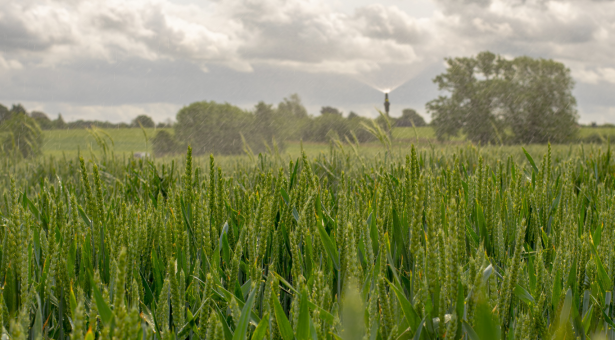
The John Innes Centre (JIC) gives notice that it has applied to the Secretary of State for Environment, Food and Rural Affairs for a consent to conduct a field trial of genetically modified wheat (Triticum aestivum) under section 111 of the Environmental Protection Act 1990.
Increasing wheat yields are a global priority for food security. This trial tests wheat plants that have been modified using three approaches: increased activity of a naturally occurring wheat gene that promotes grain expansion and increases grain weight; editing of a gene that normally limits grain size; and editing of genes that normally limit the number of grains per plant.
The purpose of the trials is to evaluate the effects of these modifications on grain weight, grain number and yield in UK-adapted wheat cultivars under field conditions. The plant material and grain produced in the trial will not enter the human food or animal feed chains.
The trial will take place at JIC Church Farm, Bawburgh, Norwich (NR9 3PY), OS map reference TG 1508, each year from 2027 to 2031.
The Secretary of State will consider any representations made relating to any risks of damage to the environment posed by the release of the genetically modified organisms within a period that they shall specify in accordance with the Genetically Modified Organisms (Deliberate Release) Regulations 2002.
The Secretary of State will place information on this proposed GMO release on a public register within 12 days of receipt of the application. The public register can be inspected by contacting the Defra GM Team (email: gm-regulation@defra.gsi.gov.uk). This information will also be placed on the GOV.UK website (https://www.gov.uk/genetically-modified-organisms-applications-and-consents). The website will include details of how and when representations may be made in respect of the application. Enquiries on this public consultation should be directed to the address below.
GM Team, Defra
2nd Floor, Seacole Building
2 Marsham Street
London SW1P 4DF
Email: gm-regulation@defra.gsi.gov.uk
More Information
Researchers at the John Innes Centre have applied to the Department for Environment, Food and Rural Affairs (Defra) to conduct small-scale field experiments of genetically modified (GM) wheat. The field trials are planned to take place within confined GM trial facilities at our field station in Bawburgh, Norwich, between March 2027 to 2032.
Why boost the yield of wheat?
Wheat provides around 20% of the calories and protein consumed globally, and increasing its yield is one of the most important goals in agriculture. Despite decades of breeding progress, the rate of yield improvement in wheat has slowed and is no longer keeping pace with the demands of a growing global population. A key reason is a biological trade-off, where attempts to grow bigger, heavier grains are typically offset by a reduction in grain number, preventing overall yield gains. New approaches are needed to ensure wheat can continue to contribute to global food security.
How has the wheat been Genetically Modified? Where do the genes come from?
These trials examines three complementary approaches to overcome this trade-off.
The first introduces a naturally occurring wheat gene, α-Expansin 6 (TaExpA6), which is normally active in wheat roots but has been modified to be switched on only in the developing grain after flowering and grain set, where it promotes grain expansion and increases grain weight. Previous trials performed in Chile with this modification in non-UK adapted wheat produced grains that were on heavier without any reduction in grain number, resulting in final yield increases.
Switching off the Grain Weight 2 gene (GW2), which normally limits how large grains can grow, allows grains to develop to a greater size. Similarly, switching off the Grain Number Increasing genes (GNI1 and GNI2), which normally restrict the number of fertile flowers per wheat spike, enables more grains to set per spike. These second and third approaches use precise gene editing (CRISPR/Cas9) to introduce these modifications into the wheat plant.
The trial will also include lines combining these approaches with the TaExpA6 modification to test whether targeting grain weight and grain number simultaneously can deliver greater overall yield gains.
Why a field trial?
Yield and yield components, such as grain weight and grain number can only be properly evaluated under real field conditions over multiple growing seasons. Field data are needed to draw robust conclusions about whether a yield improvement is genuine, stable and reproducible. This trial will provide that essential evidence for UK-adapted wheat varieties grown under UK conditions.
Who has funded the research?
This research has been funded by the UK Biotechnology and Biological Sciences Research Council (BBSRC) through the Delivering Sustainable Wheat (BB/X011003/1) and Building Robustness in Crops (BB/X01102X/1) Institute Strategic Programmes.
Where can I find out more information?
The applications are made under section 111 of the Environmental Protection Act 1990 and will be considered by the Secretary of State along with any representations relating to any risk of environmental impact.
The Secretary of State will place information on this proposed GMO release on a public register within 12 days of receipt of the application. The reference number for this application is 26/R52/01 and can be viewed on Defra’s website. Genetically modified organisms: applications, decisions and notifications – GOV.UK
The public register can be inspected by contacting the Defra GM team at: GM Team, DEFRA Area 3B Nobel House, 17 Smith Square, London SW1P 3JR [gm-regulation@defra.gsi.gov.uk](mailto:gm-regulation@defra.gsi.gov.uk)
You can also contact Professor Cristobal Uauy, who leads the application (Cristobal.Uauy@jic.ac.uk).