From Year 10 Science Camp to medical research: Sarah’s sequence of studying science
Sarah Domoney attended our Year 10 Science Camp in 2015 and is now working towards a PhD at UCL Queen Square Institute of Neurology. Here we ask her about her experience at the John Innes Centre and how it influenced her next steps.
Why did you apply for the Year 10 Science Camp?
Biology and chemistry were two of my favourite subjects at school, and I was excited by the prospect of engaging with science beyond what I could learn in the classroom. I wanted to see science being applied in a real-life context and the thought of being taught by researchers was a big draw! I was delighted when I was selected to attend.
What was the highlight of your time at the science camp?
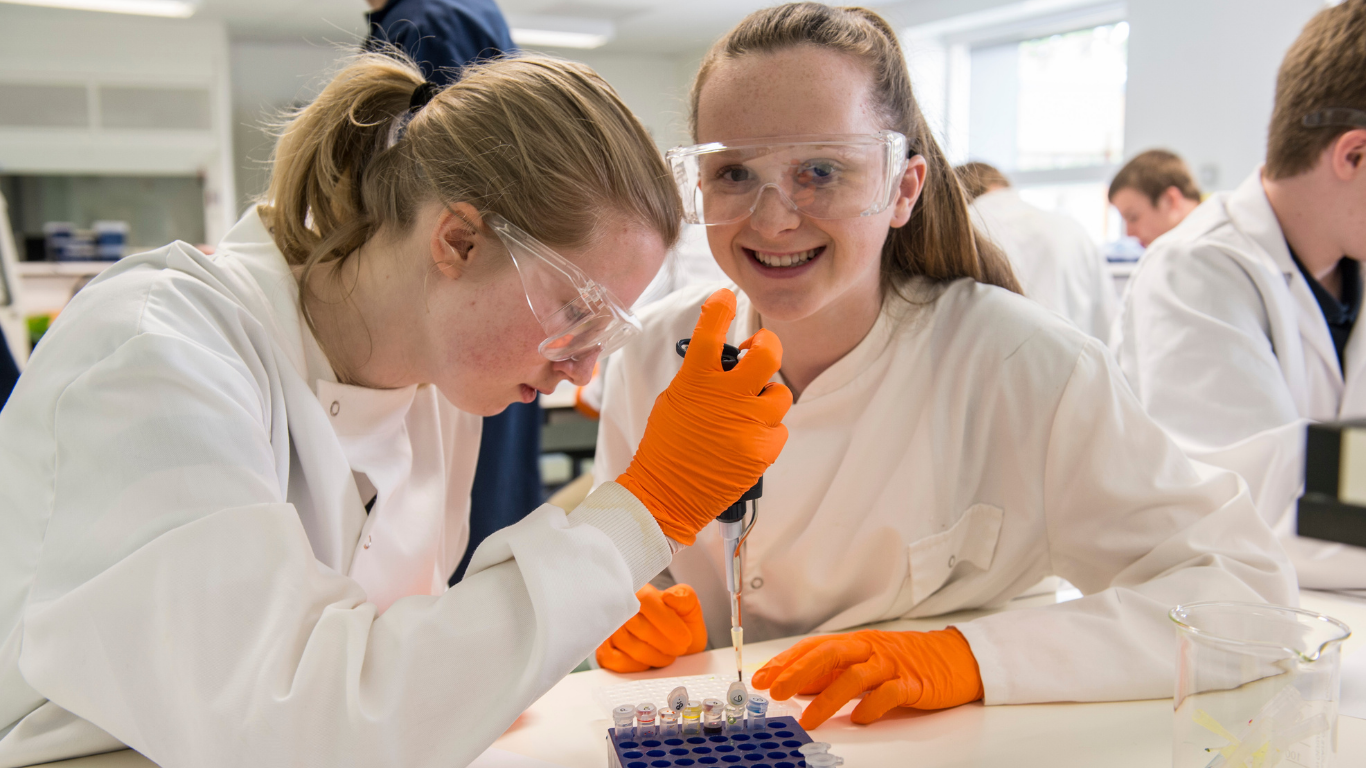
A highlight of mine has to be the laboratory tutorials! We spent time with scientists showing us how to use pipettes and set up experiments. I really enjoyed getting to do some lab work of my own, and it helped me visualise what working in research could look like. The other highlight was my lab placements at JIC and the Earlham Institute (EI), where I was able to see how the theory we had been learning in my lessons could be translated into the lab.
Who did you do your placement with?
My placements were with Dr Max Bush (JIC) and Dr Darren Heavens (EI). Max introduced me to some molecular techniques, and, with Darren, I got to work with big DNA sequencers at the Earlham Institute to contribute to his work on the ash dieback disease.
How did your science journey continue after completing the camp?
I completed my Leaving Certificate (A-level equivalent) in subjects including Biology, Maths, and Chemistry. After leaving school, I went to Trinity College Dublin to study Human Health and Disease, gaining a BSc with first-class honours, and then University College London (UCL) for the Cell, Gene, and Novel Therapies MSc programme.
Following my master’s degree, I worked as a research assistant in a DNA sequencing lab at UCL, a continuation from my introduction to sequencing at the Year 10 Science Camp. The following year I started my PhD studies working on novel gene therapies to treat epilepsy, again using DNA sequencing!
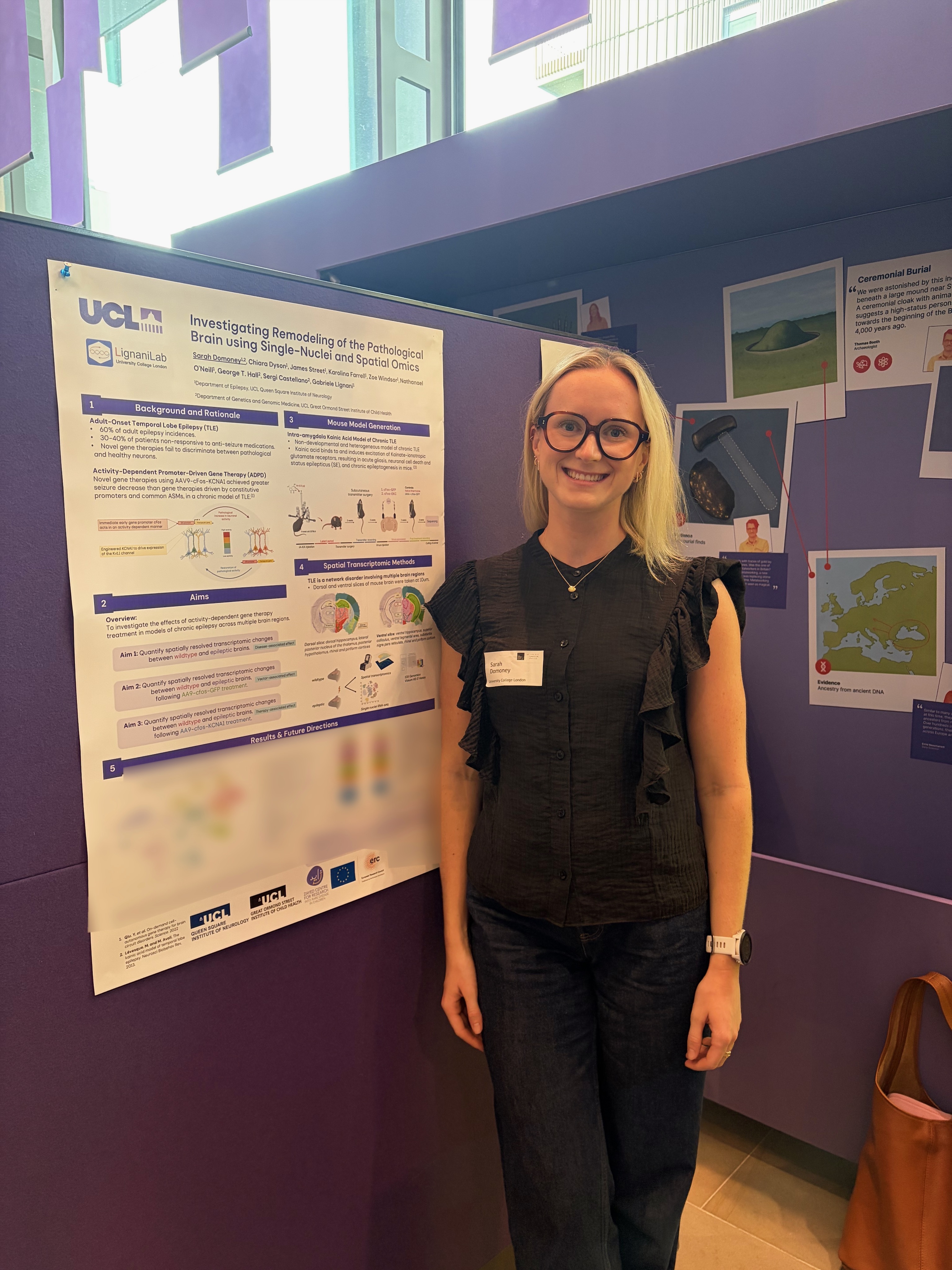
What does a typical day look like in your PhD?
Most days involve both experiments in the lab and data analysis. This can involve isolating DNA from brain tissue samples and then analysing this data to understand how the new medicines we are developing affect the brain. Every day looks different and you have a lot of independence, which are some of the joys of being a scientist!
What keeps you interested in science?
I am driven by the rapid advances in medical research, and the transformative impact modern therapeutics can have on patients’ lives. At my research institute, gene therapies are being developed for a wide range of diseases, some of which are already demonstrating real-world clinical benefit.
What inspired your next steps?
Since the science camp, my career choices have been driven by a desire to remain close to science. The experience inspired me to continue pursuing science in school as I returned confident that I would enjoy a career in science.
I often think about my first introduction to sequencing all those years ago in Norwich! I have even kept in touch with Dr Heavens, letting him know how impactful my few hours with him and his sequencers were.
Do you have any advice for students thinking about attending the science camp?
Take a chance and apply! There are so many avenues in science, and the science camp is a great way to be introduced to these and some of the cool techniques that real scientists use on a daily basis. I am so glad I took the step to send in my application: I had a really fun week, made long-term friends, and the impact it had on me continues years later.
To attend the Year 10 Science Camp in July 2027, apply here. Applications are open from 30th October 2026 to 15th January 2027.