Taking my research into the real world
Dr Yang Yue, postdoctoral researcher in Professor Cathie Martin FRS’ group, looks back at the John Innes Centre’s annual plant Breeders’ Day held at the institute’s experimental farm. We asked him about why the opportunity to meet breeders, farmers, industry partners and funders was important for his research.
This year’s Breeders’ Day was held at Church Farm in June, providing an excellent opportunity for scientists to showcase the diverse research underway at the John Innes Centre to a wide range of visitors.
This long running annual event has grown from an opportunity for plant breeders to find out more about our research, to include a more diverse range of stakeholders, reflecting the need for researchers to engage with farmers, breeders, funders, agronomists, as well as end users. Designed to strengthen the connections between research and practice, Breeders’ Day enables visitors to understand the latest research, catch up with collaborators, and review interesting crop traits.
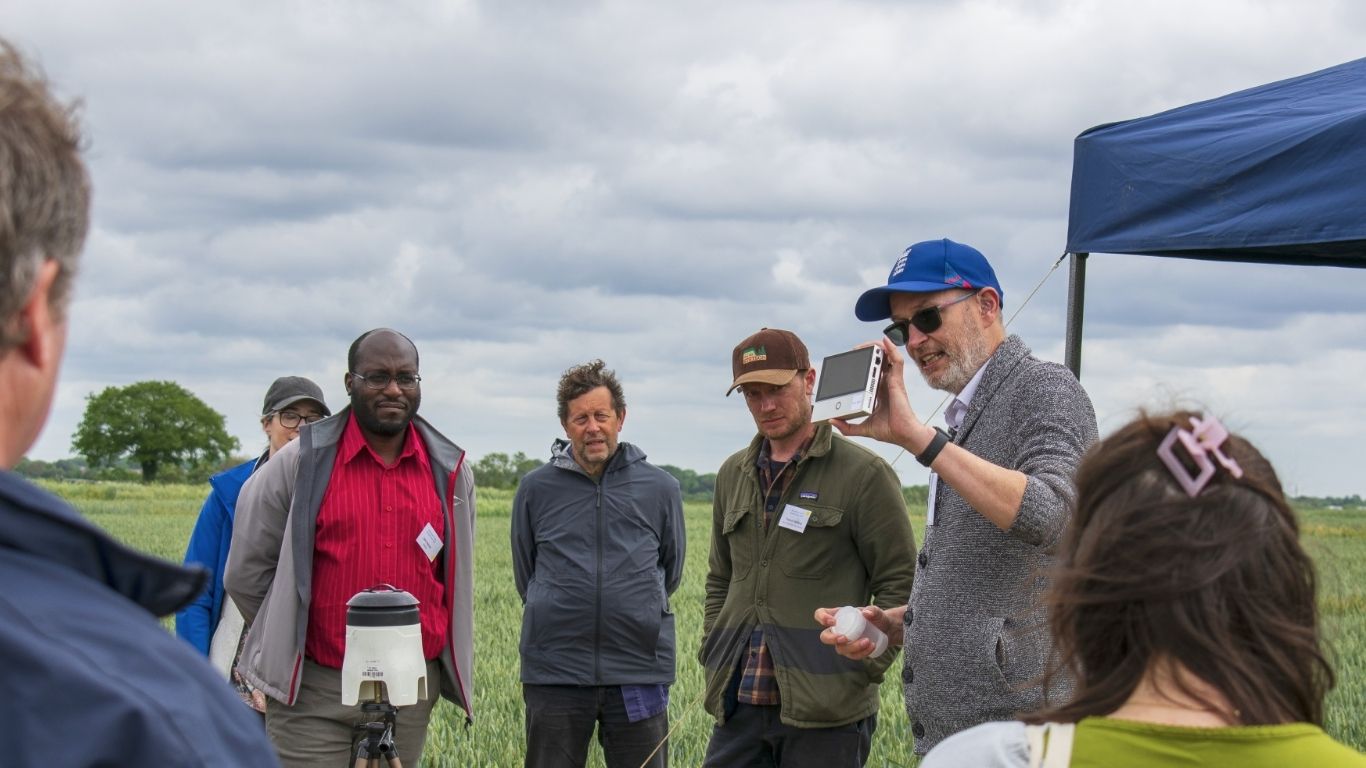
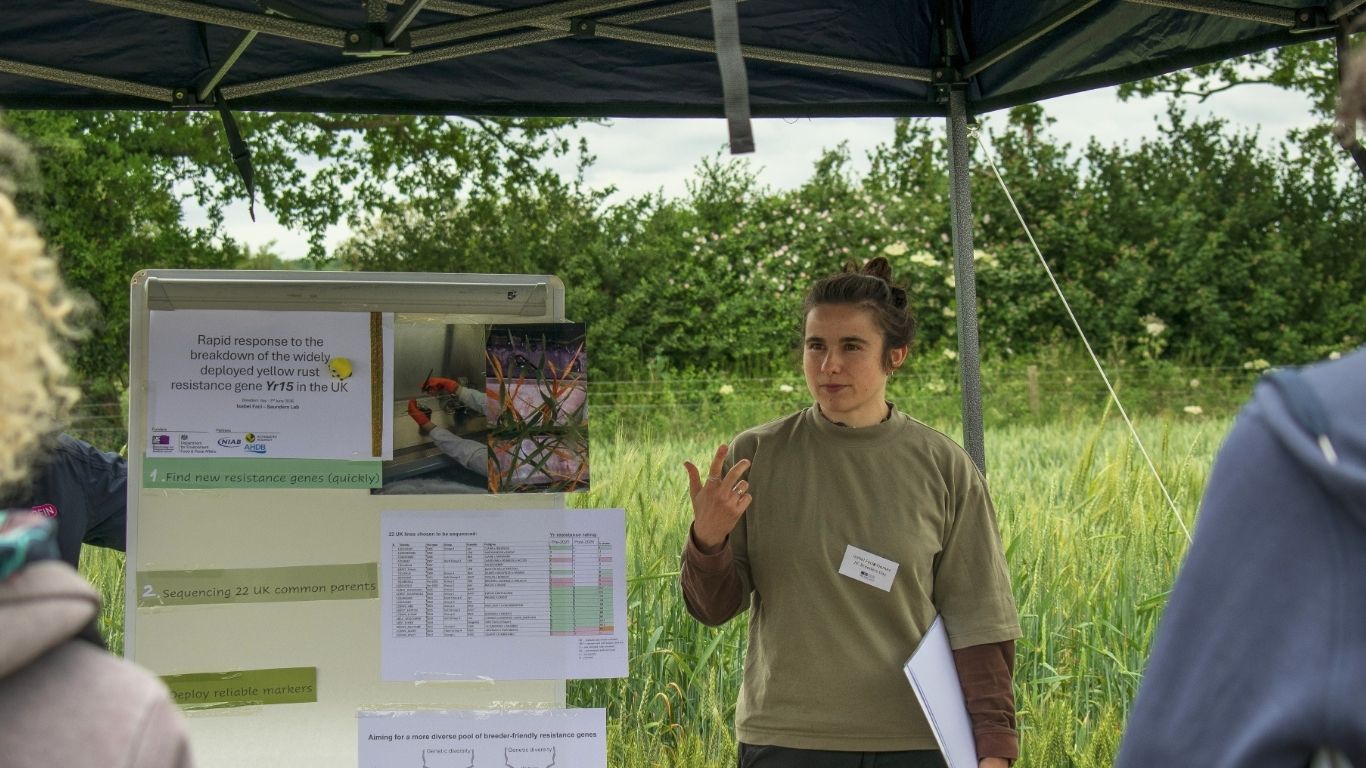
This year, research groups presented emerging work on peas, grass pea, wheat, and potatoes. The breeding strategies on display focused on increasing crop diversity, productivity, resilience, and nutritional value and highlights included pea germplasm resources, wheat resistance to pests and fungal diseases, and the use of Airseq technology to track crop pathogens. My own work on health-promoting coloured-flesh potatoes was also on show.
Darryl Playford, Field Experimentation Manager, coordinates the field experiments in collaboration with research groups across the institute, and was also involved in planning and running the Breeders’ Day with Samantha Lingwood, Directorate administrator, and Dr Simon Griffiths, Delivering Sustainable Wheat Programme Lead.
Darryl said: “In order to keep the event fresh and not too repetitive, Sam and I try to select the topics and invite speakers based on what is in the field and what has previously been covered. We try to ensure that all crops are included but this can be challenging some years. The most rewarding part is seeing it all come together on the day and chatting to people that I only really see at Breeders’ Day!”
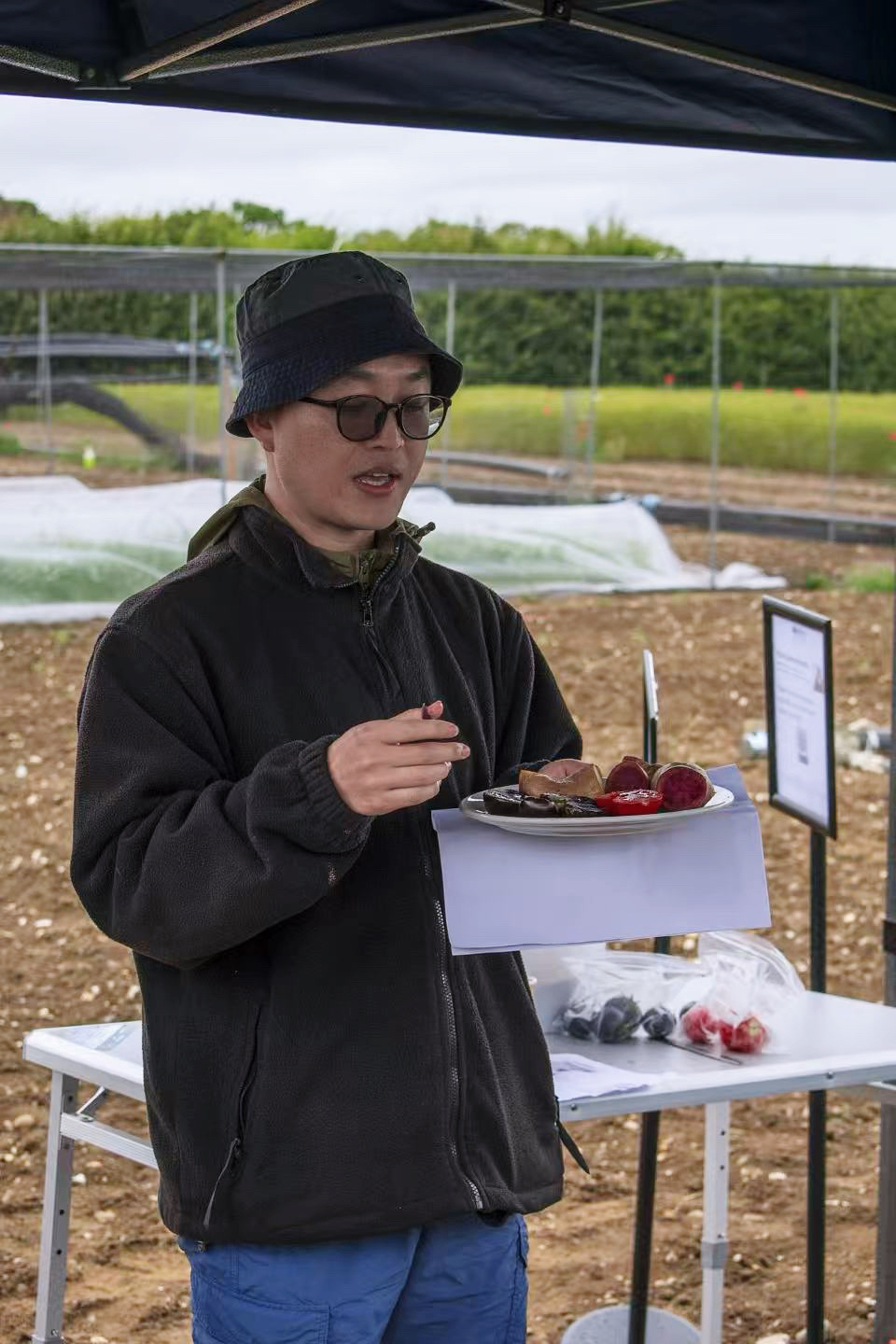
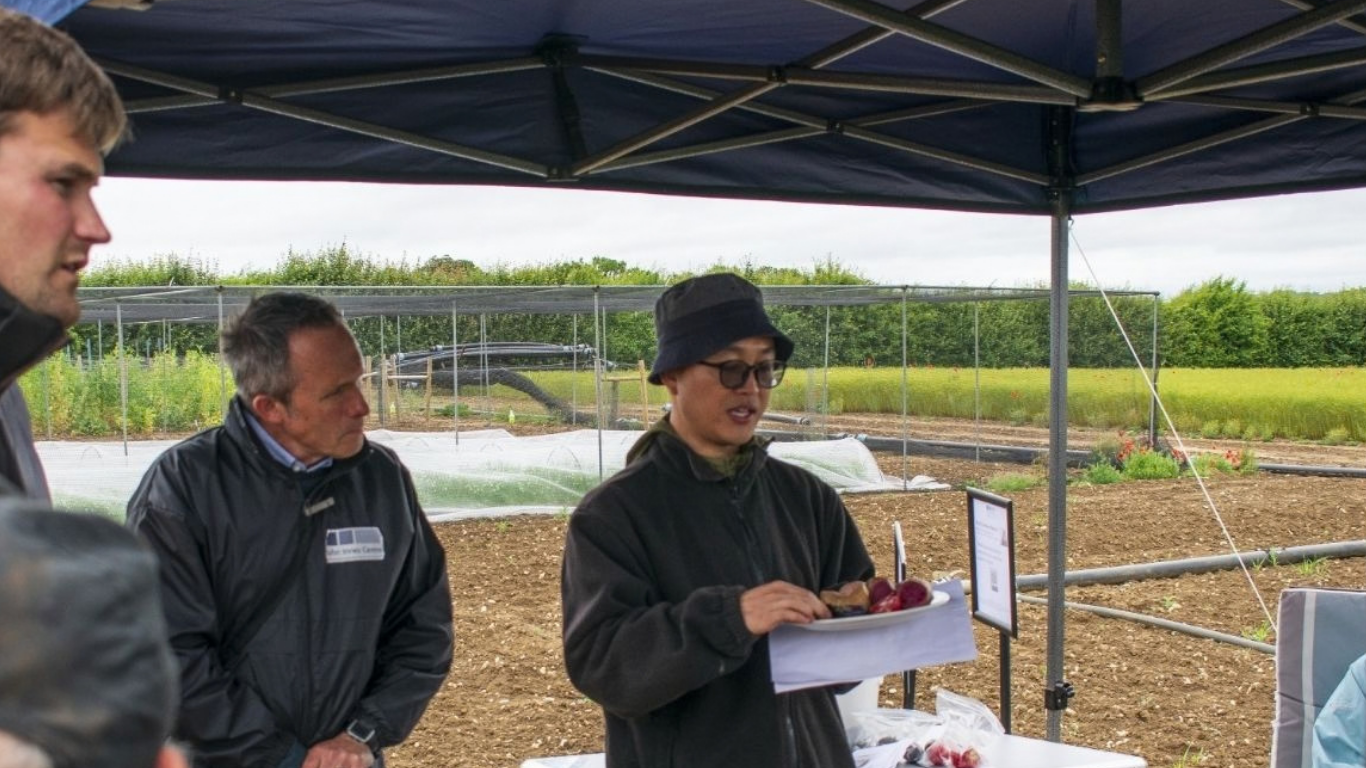
As one of the exhibitors, alongside Professor Cathie Martin FRS, I presented our research on developing health-promoting coloured-flesh potato varieties that have been grown at the Church Farm field station over the last few years. I prepared potato crisps made from these potatoes using facilities at the Broadland Food Innovation Centre so visitors were able to sample the lightly processed crisps while learning about the health benefits associated with anthocyanins, the pigments responsible for the potatoes’ distinctive red and purple colour. The crisps were very well received and helped spark conversations with visitors, leading to valuable new industry contacts and networking opportunities.
Looking back, I found Breeders’ Day to be an invaluable opportunity to see my research in the broader context of agricultural production and the challenges facing the farming industry and wider food systems. Speaking with attendees broadened my perspective beyond the biological questions I grapple with in the laboratory each day. For me, these conversations reinforced the importance of translating research into practical applications that deliver tangible benefits for agriculture, human health, and society.
After the event I chatted with Dr Peter Emmrich, Senior Affiliated Scientist and John Innes Foundation Fellow, about his impression of the event. He said: “Breeders Day was a great experience, as an opportunity to get out of the lab and discuss our work with people much closer to commercial and agricultural practice, and it was really affirming to see their interest.
“I had useful conversations and new contacts to follow up. I would really encourage researchers to participate and show their research, as this is also an opportunity to get early feedback on the real-world viability and interest in the outputs of their work, and to make links with industry that could help towards future funding applications.”
The event also provided an excellent platform for early-career researchers to share their work and hear directly from potential stakeholders.
“I always enjoy talking to the public and the end users of the science we do here at JIC,” said Dr Alba Pacheco Moreno, postdoctoral researcher in Dr Sanu Arora’s group. “I had a lot of interesting conversations with people from breeding companies, other academic institutions, and even colleagues I had not had a chance to speak with before.”
Michael Voyt, a PhD student in Professor Steve Penfield’s group, studies how warmer winters may affect winter wheat development and, importantly, yield. He said: “The event was a valuable opportunity to share our research with breeders, but also to learn from their experience and better understand their priorities. Breeders will have a unique understanding of the challenges facing farmers and are, in many ways, the interface between crop research and implementation. Being able to hear real wheat growers’ experiences of climate and crop development while standing amongst my experimental plots was both valuable and validating.”
Breeders’ Day also received enthusiastic feedback from attendees, including industry partners. Andrew Blenkiron, Managing Director of Elveden Farms Ltd, said: “The ability to come and see some of the great work in action at JIC attracted me to the event. Speaking to those who have been before made certain that I was sure to come. I was very impressed with what I saw, and I could see how some of the work taking place could bring benefits to my business in the future.”
I look forward to seeing how this event shapes up for 2027, with researchers and industry partners joining us at Breeders’ Day to continue strengthening the links between scientific discovery in the laboratory and the field and real-world impact.
It takes a village to make Breeders’ Day happen. The event’s success is made possible by the hard work of the John Innes Centre Field Experimentation and Directorate teams, and other organisers behind the scenes, whose support ensured the event ran smoothly throughout the day.