New wheat disease detection tool established in Tanzania
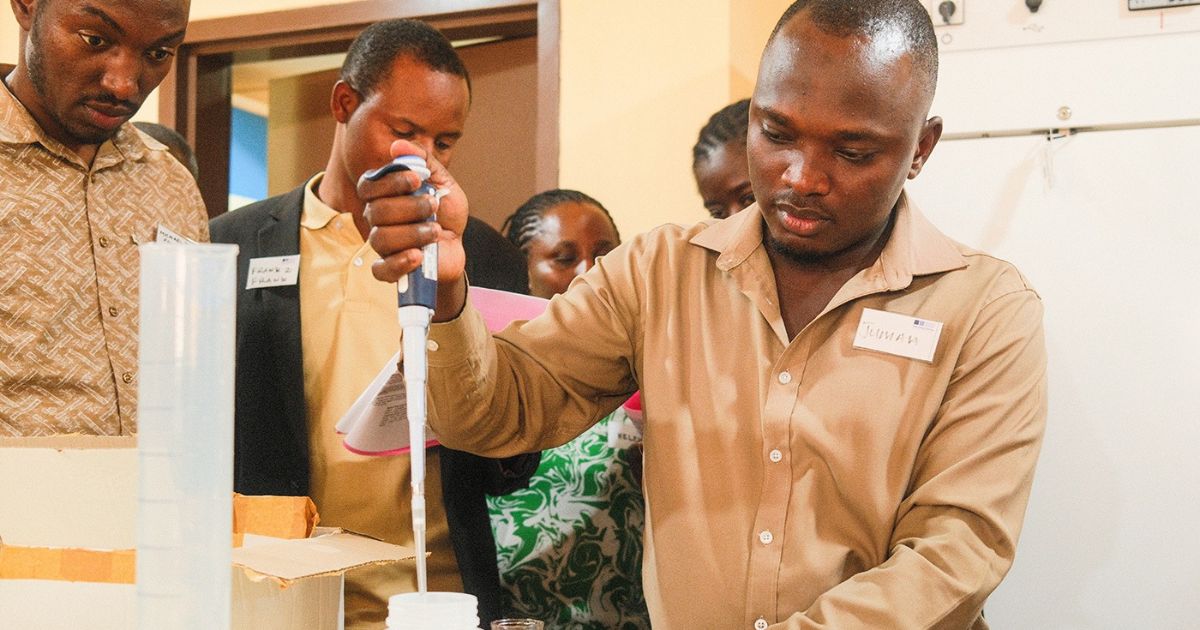
John Innes Centre researchers have trained scientists from across Tanzania to use new loop-mediated isothermal amplification (LAMP) assays to rapidly detect wheat blast, a looming fungal threat to wheat harvests.
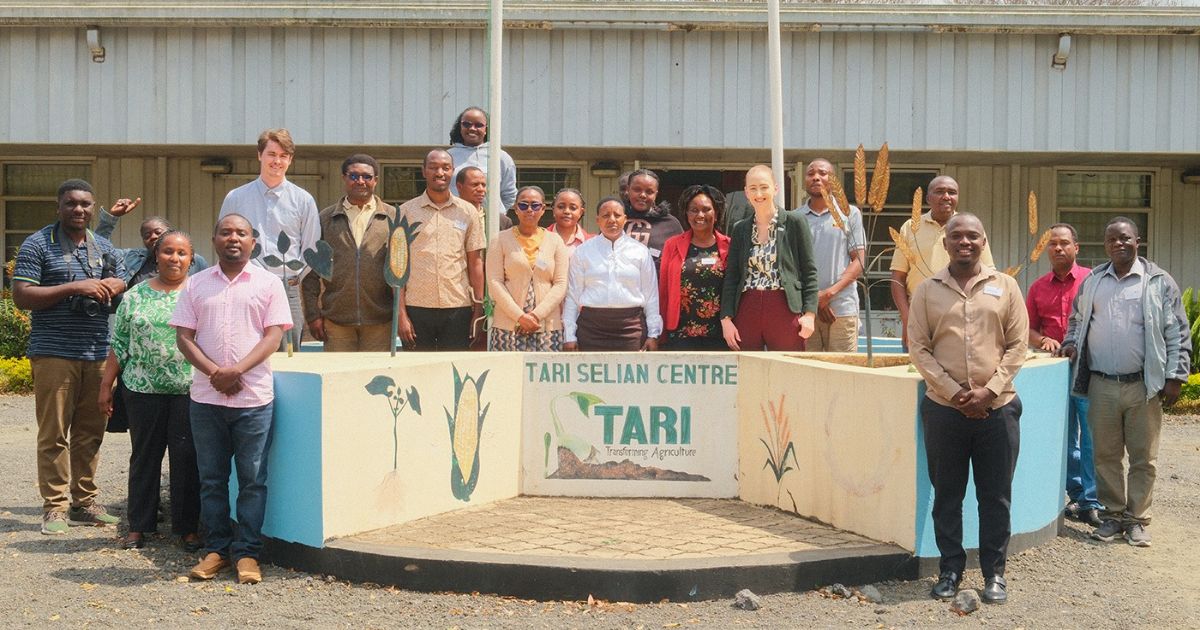
Hosted at the Tanzanian Agricultural Research Institute (TARI), the training covered how to use LAMP assays as low-cost, rapid tests to detect the presence of a fungal disease known as wheat blast (caused by Magnaporthe oryzae pathotype Triticum). The disease has not been found in Tanzania yet, but has been confirmed in neighbouring Zambia. Providing rapid detection tools such as LAMP help to improve Tanzania’s ability to identify and respond to the threat of wheat blast, should the disease reach the country.
“Wheat blast is a looming threat that could enter Tanzanian fields and damage harvests. How quickly we can respond depends on how quickly we can also identify the fungus in the field. This training provided us with a new tool to improve detection,” said Dr Caresma Chuwa, TARI-Selian Director.
Twenty-one representatives from five institutions across Tanzania took part in the training, which also provided enough resources for the Tanzanian team to test any samples they believe could be wheat blast in the coming season. Findings for this work are already connected to the DEWAS network, a global surveillance network tracking wheat diseases and informing control measures to protect farmers.
The next step for the technology is to develop tests that do not require a heating step and can run without the need for refrigerated reagents. Doing so will further unlock wheat blast diagnostic tests over rural areas.
“It’s great to see this new technology now being trained and taken up by wheat disease pathologists across Tanzania. Working together with these communities strengthens our capacity to detect the spread of wheat blast and quickly respond, ultimately protecting farmers’ harvests and the communities they support,” said Salome Munissi, scientist researcher, TARI-Selian.
LAMP assays
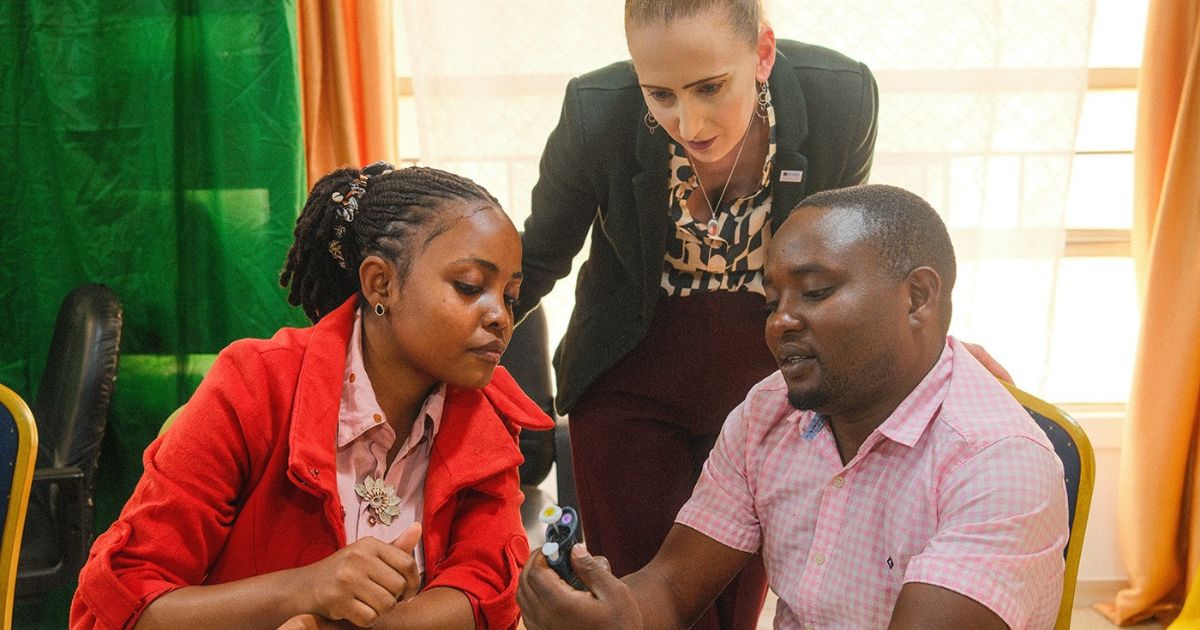
The Saunders Lab at the John Innes Centre developed a low-cost, accessible test to rapidly confirm if a sample contains wheat blast, developed as part of the Global Surveillance Advisory System (GSAS) project. It was this new test that was taught to a selection of Tanzanian researchers at the workshop hosted at TARI-Selian.
The new test is a type of LAMP assay, which has been used elsewhere to track diseases, such as citrus greening. These assays are extremely sensitive to detect low amounts of a disease marker, making them ideal for early detection from small field samples.
“We chose LAMP assays as they provide very precise detection while also being easily accessible for field labs to conduct. The process is quick and provides a clear result of whether Fusarium head blight or wheat blast is detected. This makes them a perfect tool for the field teams across Tanzania,” said Liam Butler, research assistant in the Saunders Lab.
While similar to PCR reactions, the advantage of LAMP assays is that they can be run without the need for a complex and expensive thermocycling PCR machine, requiring only a simple heating plate. They’re also quick, needing between 30 minutes to one hour of heating at a single temperature to return a result. This low resource demand and speed make these tests accessible for low-resourced field-based labs across rural areas.
The JIC-designed LAMP assays to confirm the presence of wheat blast through a colour change test, turning from pink to yellow in the presence of the pathogen. This allows a clear confirmation to researchers for the presence of wheat blast in the sample. Researchers can then follow up this finding by testing the sample with more advanced tests to confirm the results and uncover more detail about the strain of infection.
A new fungal threat
Many crop diseases are well established, while others have recently emerged. Wheat blast is one of these new diseases, a fungal disease that first emerged in Brazil in 1985 which thrives in warm, humid conditions. The fungus causes diamond shaped lesions on wheat leaves, bleached wheat spikes, and shrivelling or failing grains. Wheat blast outbreaks can spread quickly, causing 50-100% losses, devastating farmers’ livelihood and local food security.
Wheat blast can be spread by spores that travel with infected grains, by animals and human activities such as trade. It takes just one spore to infect a plant, and infected plants produce up to 6,000 spores a day.
Since its discovery in Brazil, wheat blast spread to surrounding South American countries and globally. It was identified in Bangladesh in 2016 where it caused $2.1 million loss in agricultural value in weeks.
The disease reached Africa in 2018 with its confirmed discovery in Mpika District, Zambia, where it quickly spread across neighbouring districts. Tanzania is at particular risk as the disease was found in Zambia’s neighbouring northern border.
The best way to prevent the spread of wheat blast is to grow resistant varieties or use fungicides to control infected plants. These approaches reduce the number of infected plants producing spores. Because of the potential losses wheat blast can cause, it is essential for countries to act quickly with control methods to limit damage when an outbreak is discovered. The challenge is that it can be hard to detect wheat blast in the field as it can be mistaken for another disease, Fusarium head blight (FHB) primarily caused by Fusarium graminearum.
The ability to respond to disease depends on how quickly and accurately it can be detected. Many crop diseases have visible symptoms we can detect by eye. For instance, the bright orange colours of wheat rusts are so clear that they can be tracked by cameras in space.
FHB is another fungal disease impacting global wheat harvests. Outbreaks cause yield losses of around 10-50% and the build-up of mycotoxins which make grain unsafe for humans and animals to eat. Unlike wheat blast, FHB has been found in Africa for around fifty years and has become increasingly common with climate change.
Both FHB and wheat blast cause similar symptoms of head bleaching and shrivelled grain making it difficult, even for experts, to consistently tell the diseases apart by eye. This similarity in appearance raises the concern that wheat blast could arrive in a country and falsely be identified as FHB, allowing it to go unnoticed and to spread further.
Laboratory or microscopy techniques can easily distinguish whether a sample is infected with blast or FHB, but these approaches often depend upon expensive equipment and reagents that are scarce across many parts of the world.
“Wheat blast poses a major threat to wheat harvests across Africa, so we need better tools to accurately and rapidly track it. Our new LAMP assays provide this; an accessible test that field labs can use to confirm when they’re suspicious an FHB sample could be wheat blast,” said Professor Diane Saunders, John Innes Centre Group Leader.